June 2026 CPI Hits 4.2 Percent: How Bitcoin Reacted and What Happens Next
May CPI came in at 4.2 percent year over year, the highest reading since April 2023, exactly matching forecasts. Bitcoin staged a relief rally instead of selling off. Here is what the in-line CPI print means for Bitcoin, the Federal Reserve's June meeting, and the path toward recovery.
TL;DR: The May 2026 CPI report released June 10 showed headline inflation at 4.2 percent year over year, up from 3.8 percent in April and the highest reading since April 2023. Core CPI rose to 2.9 percent from 2.8 percent. Both figures matched economist forecasts exactly. Bitcoin, which had been trading near $61,500 ahead of the release, staged a short-term relief rally instead of the selloff many traders feared. MediaCrypto analysis: an in-line print that confirms sticky inflation is a mixed signal, but the absence of a negative surprise removes the worst-case scenario heading into the Federal Reserve's June 16-17 meeting. Energy prices driven by the Iran conflict accounted for much of the increase, a factor the Fed may treat differently than core demand-driven inflation.
Bitcoin spent all of June 9 holding a tight range between $60,000 and $63,000, waiting for one number.
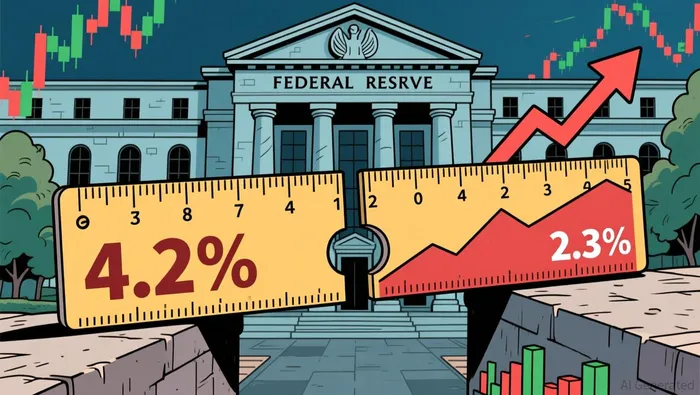
The May Consumer Price Index report landed at 8:30 AM ET on June 10. Headline inflation came in at 4.2 percent year over year, up from 3.8 percent in April. That is the highest annual reading since April 2023 and confirms a clear pause in the disinflation trend that markets had been hoping would continue. Core CPI, which strips out food and energy, rose to 2.9 percent from 2.8 percent.
Both numbers matched what economists had forecast almost exactly. And that, in a market this fragile, turned out to matter more than the headline itself.
Why a Hot Number Did Not Crash Bitcoin
The setup heading into the print was genuinely tense. 10x Research had flagged that Bitcoin needed a sub-4.0 percent reading to ease selling pressure meaningfully. The market consensus was already at 4.2 percent, meaning a print at or above that level would confirm two consecutive months of rising inflation. Spot Bitcoin ETFs had already seen $1.89 billion in outflows in June alone, on top of $1.72 billion the previous week, the largest weekly outflow since April 2025.
By every reasonable expectation, a 4.2 percent headline number landing exactly as feared should have triggered another leg down. Instead, cryptocurrency markets posted a slight spike in the immediate aftermath of the release. Bitcoin, which had been trading in the $61,000 to $62,000 zone prior to the print, saw short-term buying interest push prices higher.
The explanation is almost entirely about positioning rather than fundamentals. When a market has been pricing in a bad outcome for days, and that outcome arrives exactly as expected with no additional negative surprise, the selling pressure that was front-running the release often reverses. Traders who shorted into the print took profits. Traders who had been waiting on the sidelines for clarity, any clarity, started buying. The number itself was bad. The fact that it was not worse was, perversely, good news for an oversold market.
What Drove the Inflation Increase
The composition of the CPI increase matters as much as the headline figure. On a monthly basis, the all-items index advanced 0.5 percent, driven largely by a 23.5 percent year over year surge in energy prices tied to ongoing geopolitical tensions, particularly the US-Iran conflict.
This is an important distinction for how the Federal Reserve interprets the data. Energy-driven inflation from a geopolitical shock is conceptually different from inflation driven by strong consumer demand or wage growth. The Fed's mandate focuses on underlying price stability, and a core reading at 2.9 percent, while elevated, is not accelerating dramatically. If the Iran situation de-escalates, as the ceasefire framework discussed in late May suggested it might, the energy component of CPI could ease in subsequent months without any policy action required.
This is the scenario MediaCrypto flagged in our earlier coverage of why Bitcoin is dropping in 2026. Geopolitical risk premium in macro data is more reversible than structural inflation, and markets that understand this distinction tend to look through energy-driven CPI spikes more than demand-driven ones.
The Federal Reserve Meeting Just Got More Complicated
The June 16-17 Federal Reserve meeting was already the most important scheduled event for Bitcoin's near-term direction. Markets are pricing in no rate hike at this meeting, but the CPI print adds a new layer of complexity to what comes after.
BNP Paribas published forecasts last week suggesting the Fed could deliver three interest rate hikes beginning in December 2026, reversing the three rate cuts implemented in 2025. The bank attributed this to persistent inflation risks, resilient labor market conditions, and the ongoing Iran-related economic pressure. If that forecast proves accurate, it represents a significant shift from the dovish pivot narrative that bulls have been counting on as a Q3 2026 catalyst.
A day after CPI, the Producer Price Index report adds another data point. PPI is forecast to show 0.8 percent month over month, down from 1.4 percent previously, while annual headline PPI is estimated at 6.4 percent. The combination of CPI and PPI data over these two days gives the Fed its clearest picture yet heading into the June meeting.
What This Means for the Recovery Timeline
MediaCrypto's recovery framework for Bitcoin has rested on three catalysts: the SpaceX IPO, the CLARITY Act vote, and a Federal Reserve dovish signal. Today's CPI print does not eliminate any of these catalysts, but it does make the third one less likely in the immediate term.
The SpaceX IPO priced today with $250 billion in demand against a $75 billion raise, a nearly 4x oversubscription. That catalyst remains fully intact and arguably strengthened. The CLARITY Act remains on the Senate legislative calendar with White House backing, also unaffected by today's data.
The Fed catalyst is the one in question. An in-line but elevated CPI reading, combined with BNP Paribas's hawkish multi-hike forecast, suggests the Fed is more likely to maintain a cautious stance through the June meeting rather than signal cuts. This pushes the macro tailwind component of the recovery thesis toward late Q3 or Q4 2026 rather than immediately following the June meeting.
The good news is that Bitcoin's relief rally on an in-line print, despite the elevated reading, suggests the market had already priced in much of this bad news. With Fear and Greed at single digits earlier this week and Bitcoin supply in loss above 50 percent, the asset was positioned for capitulation-level pessimism. A non-catastrophic data point, even one confirming sticky inflation, was enough to spark buying from positions that had nowhere left to go but up.
MediaCrypto's Take
Today's CPI print is not the dovish surprise that would have immediately validated the bull case. But it is also not the hot surprise that would have confirmed the bear case. It is the least bad outcome available given where expectations had drifted, and the market's relief rally reaction confirms that positioning, not fundamentals, was driving much of the recent price action.
The SpaceX IPO settlement on June 12 remains the more immediate catalyst. The Fed meeting on June 16-17 now carries more uncertainty than it did a week ago, but markets had already adjusted for a hawkish Fed before today's data. Bitcoin holding above $60,000 through this print, after briefly breaking below it earlier in the week, is itself a meaningful technical signal that the immediate downside momentum has stalled.
About the Author
This article was researched and written by the MediaCrypto editorial team. MediaCrypto is a cryptocurrency news and market analysis publication covering Bitcoin, Ethereum, altcoins, regulatory developments, and market trends. Follow our daily analysis on X at @MediaCryptoAI.
Follow us on X: https://x.com/MediaCryptoAI
FAQ — CPI June 2026 and Bitcoin
What was the May 2026 CPI number? Headline CPI came in at 4.2 percent year over year, up from 3.8 percent in April and the highest reading since April 2023. Core CPI rose to 2.9 percent from 2.8 percent. Both figures matched economist forecasts exactly.
How did Bitcoin react to the CPI report? Bitcoin staged a short-term relief rally rather than selling off, despite the headline number confirming two consecutive months of rising inflation. The reaction was driven by positioning, with the market having already priced in a bad outcome before the release.
What does the CPI print mean for the Fed's June meeting? Markets are pricing in no rate hike at the June 16-17 meeting. However, the elevated CPI combined with BNP Paribas forecasts of three potential rate hikes beginning in December 2026 suggests the Fed may maintain a cautious stance rather than signal near-term cuts.
Why did energy prices drive the CPI increase? A 23.5 percent year over year surge in energy prices, tied to the ongoing US-Iran conflict, accounted for much of the monthly 0.5 percent increase in headline CPI. Geopolitical-driven inflation is generally viewed as more reversible than demand-driven inflation by the Federal Reserve.
What is the next major catalyst for Bitcoin after CPI? The SpaceX IPO begins trading on Nasdaq on June 12 following $250 billion in demand against a $75 billion raise. The CLARITY Act remains on the Senate legislative calendar with a floor vote expected before July 4.
For live Bitcoin prices and market data see read this article
Read also: Why Is Bitcoin Dropping in 2026 — read this article
Read also: SpaceX IPO June 11: What It Means for Bitcoin Price — read this article
This article is for informational purposes only and does not constitute financial advice. Always do your own research before making investment decisions.